Mercedes trackside engineering director Andrew Shovlin says that the team still has to address weaknesses on the W15, citing high temperatures and rear limited tracks as the key areas of focus.
After a difficult start to 2024 the Brackley team made good progress as it brought developments to the car, winning three of the four races held prior to the summer break.
Shovlin acknowledged that the team made important steps at the Miami and Monaco races in May, creating a base on which to build.
“We didn’t really bring developments to the early races of the year,” he said. “So we started to pull forward developments with a new floor in Miami. We then pulled forward a front wing that was due later in the season, we had one on George’s car in Monaco.
“I think by that point you could see that we had a car that was definitely one that you could work with and improve, around that time of Monaco.
“And then what we have seen since then is a pretty impressive delivery of updates to every single track.”
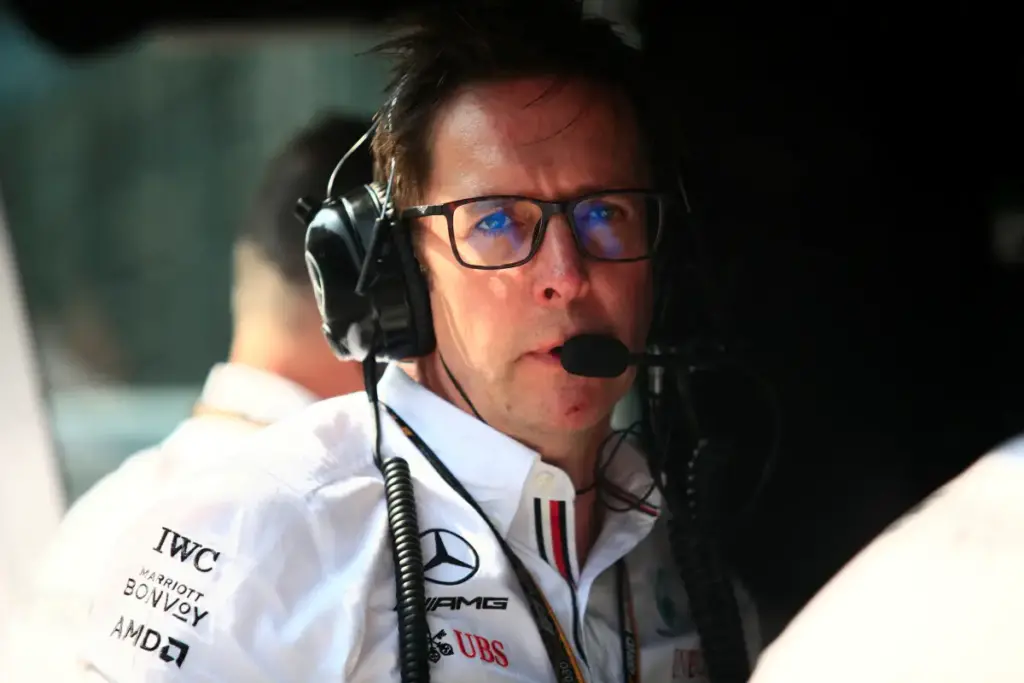
Shovlin noted that the car has become less unpredictable.
“As you sort of solve problems with the handling of the car, the challenge actually becomes simple, and you get more clarity about what you want to do next,” he said.
“In the early part of the year we had a car whose behaviour would change wildly with relatively small swings in track condition. In Jeddah we were bouncing badly in the high-speed corners. It’s quite hard to unpick all those issues.
“Whereas if you look at tracks like Budapest, you’d say we’re still putting too much temperature in the rear tyres. And there’s also just an element that we need to find a bit more base performance. The problems that you’re dealing with as the car has got quicker have also become easier to see.”
Asked to clarify what issues the car still has he said: “The main remaining weakness is in hot conditions and rear limited circuits. We’re not as good as the McLarens or Max. We saw that in Budapest, we saw that in Austria.
“I think we’ve made progress there over the sequence of these recent races. But then everyone’s trying to develop their cars. If you’re not developing at a faster rate than the others, then you’re quite quickly slip backwards.
“And so there’s always there’s going to be a focus just on how much development you can bring, and we can only see a month or six weeks into the future, because that’s the sort of horizon you’re working with in your wind tunnel.
“What we don’t know is will we be able to keep delivering performance from the wind tunnel, from our vehicle dynamics group and mechanical design groups? Are they going to continue to be able to bring performance into the last part of the year?
“Hopefully, and we’ve got good ideas. But there’s a lot of work to go through between having an idea and actually having physical parts that you can put on the car and make it go quicker.”
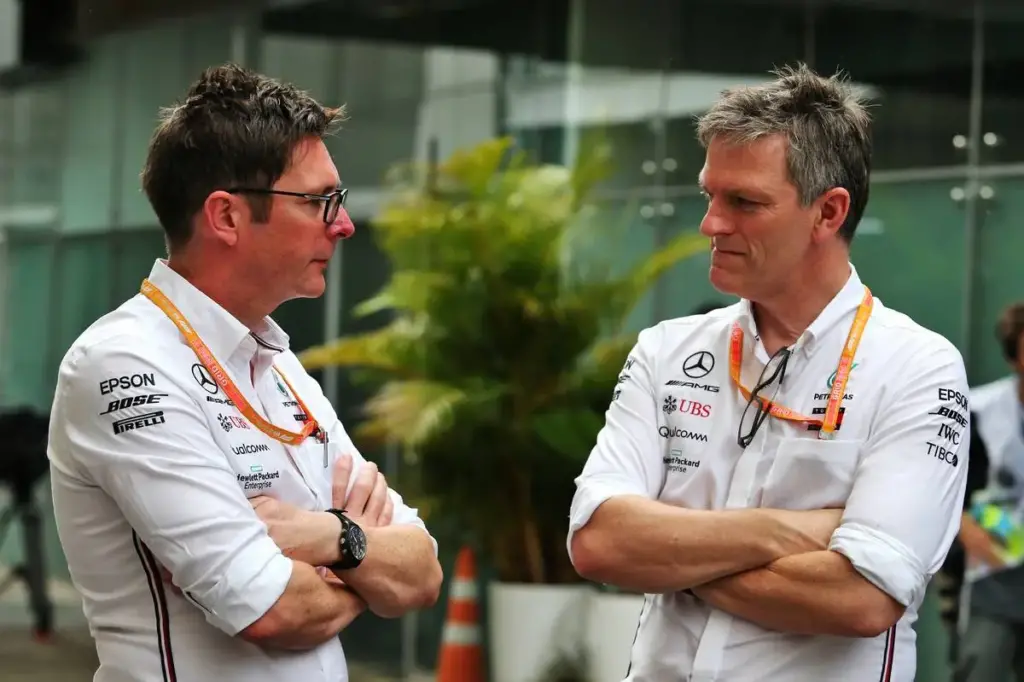
Shovlin admitted that deciding how to split resources between the W15 and next year’s car is an ongoing challenge.
“We’re flat out trying to find performance,” he said. “Later on in the year there have to be discussions around is it this car, or does it wait for the next car? And the cost cap inevitably means that those discussions are a trade between performance gain and cost.
“We do want to be fighting at the front next year. So we’re always going to make decisions that mean that that is a possibility. And then in terms of the wind tunnel, you’ve got the point at which you progressively shift resource from the current car to next year’s car.
“I think probably every team has already started working on next year’s car. But how rapidly you shift that resource over is a factor.
“But teams may find that what works on this car works on next year’s anyway, or vice versa. So it’s not like the challenge we’ll have in 2026, where it’s a completely different beast.”