Haas replacing Guenther Steiner as team principal was arguably the biggest F1 news story to start the year. Amidst all of the latest off-track developments, it is worth evaluating the reasons for Steiner’s exit.
Even before the start of 2024 in Bahrain, Haas is facing significant scrutiny. This was largely inevitable given Steiner’s exit, with the 58-year-old being a driving factor in growing the team’s support base.
However, even without this shock move, the American outfit has a lot to prove. Their last five seasons in Formula 1 have consistently shown their limitations. Both from a commercial and competitive lens, there are huge discrepancies between Haas and other teams on the grid.
Ayao Komatsu, the team’s newly appointed team principal, has already warned that the VF-24 will be uncompetitive. At least in the early stages of the season, Haas is expecting to be towards the back of the field.
Considering their very uninspiring record of mid-season development, it cannot be said there is much hope heading into 2024. With this in mind, it is important to understand the fundamental issues that have limited Haas in Formula 1.
These problems were ultimately pivotal in Guenther Steiner and Simone Resta exiting the team.
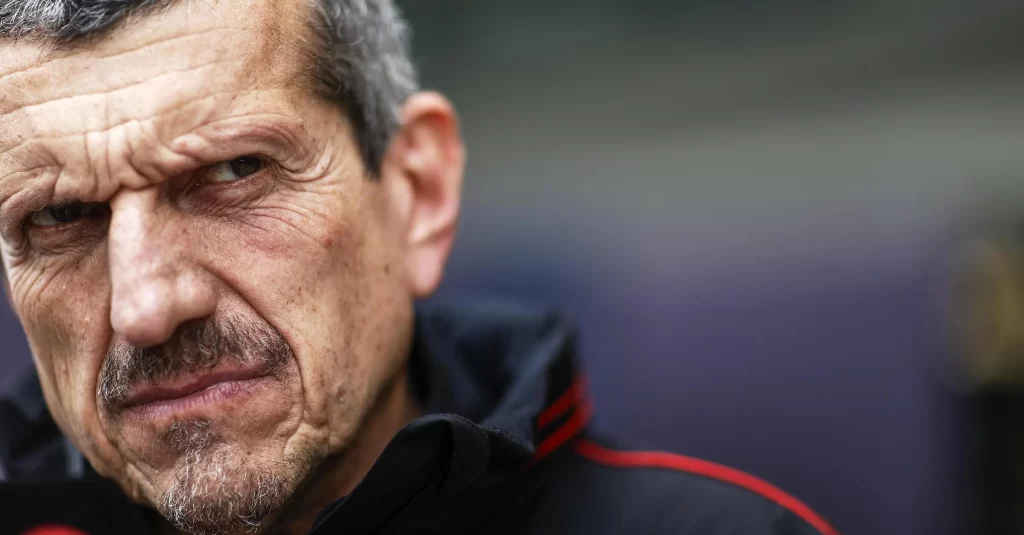
Steiner pessimistic about Haas F1 future
More specifically, the unwillingness of team owner Gene Haas to address these issues is what created this rift. Speaking in a recent interview, Steiner was blunt about the reasons for his exit:
“I wanted to invest in the team, he [Gene Haas] didn’t,” he told Auto Motorsport.
“We simply had different views on how things should proceed.
“The way the team was set up, you couldn’t ask for much more. This is not a criticism of the team – but the reality.
“The budget cap has completely changed Formula 1. Old structures no longer work.
“McLaren, Williams, AlphaTauri have been investing for two years in the infrastructure… If you don’t follow suit, you can’t expect to be able to keep up.”
Once again, the foundational approach that Gene Haas insists on pursuing is cited as a key issue.
The American team’s best hope of being competitive in 2024 could be via Ferrari – whose progression might trickle down to the VF-24.
However, outsourcing success to another team is hardly a sustainable model. Ayao Komatsu’s task is – in many ways – to make Haas punch significantly above their weight.
Unfortunately for Haas, with investment and manufacturer presence increasing across F1, it is increasingly unrealistic to pursue this objective.