It’s already time to talk about 2026. F1 is always evolving, both on and off-track. Teams will soon begin development for the next regulatory cycle, although – of course – there is still the rest of 2024 and 2025 to dispute.
The FIA has finally presented the 2026 regulations relating to the chassis and aerodynamics. These components will support the new Power Units. F1’s next regulations represent a radical change from the cars on the track today – in terms of shape, concept, behaviour and much more.
There will be a major innovation in 2026 – the introduction of active aerodynamics. The movable rear wing will remain but will no longer be the well-known DRS (Drag Reduction System). Instead, it will be a real performance element, involving both the rear and front wings.
A true technological revolution for Formula 1, pursued with a clear purpose in mind. To increase the spectacle on the track.
F1 2026 objectives: significantly reduce drag, without giving up too much downforce aerodynamic load
A few months ago, the news first broke about the FIA introducing active aerodynamics into Formula 1. This work was sparked by the new 2026 engines, which will have a strong electrical footprint, removing the MGU-H component. Conversely, the MGU-K and batter will be more important. Furthermore, there will be a different distribution of energy between the electrical part and the internal combustion engine. 100% sustainable fuels will also be used.
The engine rules have been validated for some time. Across various manufacturers, designs are already at an advanced stage.
However, a major limitation has been the need for energy to be released throughout the entire lap. This would force the drivers to Lift & Coast on the straight, especially on circuits where a lot of power is needed. Monza is a prime example.
The FIA never responded publicly. Despite this, Frederic Vasseur responded to these statements in a press conference and calmed the waters. He stated that nothing had yet been definitively decided. Vasseur emphasised the importance of waiting before making rash conclusions.
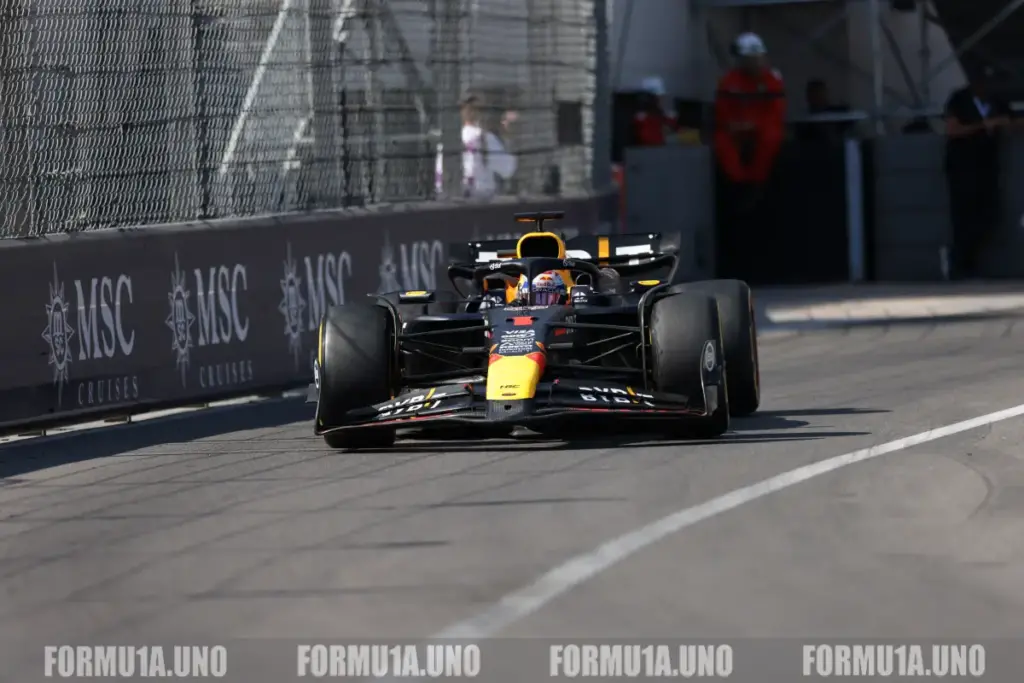
The F1 technical department has been actively involved in establishing the appearance and technical characteristics of the new Formula 1 cars, following very specific guidelines.
“We developed rules to accommodate the new engines. If you’re limited in terms of energy for the straights, you don’t want extra weight or drag that could slow you down. We started from there in developing more powerful machines. Small and agile and with the implementation of active aerodynamics,” explained FIA Single-Seater Director Jan Monchaux.
The former Sauber engineer has explained how this new device will work. It will eliminate the DRS system as we know it today. Instead, two additional flaps will be present – on both the front and rear wings.
“It will be used on every straight. Not to facilitate overtaking but it will serve to drastically lower the resistance level of the car. This will increase the maximum speed on the straight, thus also allowing greater energy recovery during braking. Having such a great effect from the rear wing, to balance the car on the straights, the front wing will also have a movable flap”.
The simulations required a ‘movable’ front wing to balance the car
This detail was also explained by the head of the FIA’s aerodynamic department, Jason Somerville, which was developed during construction thanks to the results coming out of the simulations carried out with teams and drivers.
“The drivers were not comfortable with the car’s balance with such an unloaded rear wing and so much load on the front. This led us to think about a moving flap on the front, too,” explained Somerville.
This is different from DRS, which does not create this aerodynamic imbalance between the front and rear. Form 2026, the new rear wing will be designed to have more mobile elements. There will be three in total, including a larger opening.
This will result in a lowering of the load level and, consequently, a greater reduction in rolling resistance, more powerful than the current DRS system. However, the implementation of a movable front wing is not something totally new to Formula 1.
“In 2009, the technical regulations provided for its possible use, but since it was not used much, it did not remain in the regulations for long and was then removed. But It’s not new technology,” Somerville recalled.

The rumours about active aerodynamics have been accompanied by a bit of scepticism, especially due to past memories, where its use proved negative and even entailed some risks. Recently, however, Adrian Newey also expressed his opinion on the issue, reporting how Formula 1 nowadays is better equipped for the use of technology of this type, and many problems of those times would not arise today. The words of the former Red Bull engineer are in line with the thoughts of the FIA itself.
“Trying to improve aerodynamic efficiency is always a good thing, and since you can achieve it that way, why not? We also see it on some road cars,” explained Somerville. It was precisely aerodynamic efficiency that pushed the focus on this element.
“If we put a 2026 Power Unit on the current single-seaters, there would be a drastic drop in speed at the end of a normal main straight. Therefore, we had to look for a way to significantly reduce drag without giving up aerodynamic load,” concluded the English engineer and FIA Head of Aerodynamics.